
Can You Wear Gold Jewellery Every Day? Care and Durability by Karat
Can you wear your fine gold jewellery 24/7? Our goldsmiths break down how 10K, 14K, and 18K gold alloys resist daily wear, why gym dumbbells damage rings, and how to protect delicate prongs over decades.
The 24/7 Jewellery Myth
Many fine jewellery owners ask our Surat workshop team: "Can I wear my solid gold engagement ring or pendant in the shower, at the gym, and to bed every single day?"
While solid gold never rusts, tarnishes, or peels like cheap plated brass, pure gold is a remarkably soft, malleable element. Whether a piece of gold jewellery can withstand non-stop daily wear depends entirely on two factors: its karat alloy composition and the physical forces of your daily routine.
---
Gold Karats & Vickers Hardness: How Strong Is Your Gold?
In metallurgy, metal scratch resistance and structural rigidity are measured on the Vickers Hardness Scale (HV). The higher the number, the more resistant the alloy is to bending, denting, and abrasive scratching:
| Gold Karat | Pure Gold % | Master Alloy Metals | Vickers Hardness (HV) | Best For |
|---|---|---|---|---|
| 24 Karat | 99.9% | None (Pure Gold) | ~25–30 HV | Investment bullion; too soft for rings |
| 22 Karat | 91.6% | Copper, Silver | ~55–65 HV | Occasional bridal pieces; easily bent |
| 18 Karat | 75.0% | Copper, Silver, Zinc | ~125–160 HV | Balanced luxury: rich color & durability |
| 14 Karat | 58.5% | Copper, Silver, Nickel/Zinc | ~150–180 HV | Ultimate daily wear champion |
| 10 Karat | 41.7% | Copper, Silver, Zinc | ~180–220 HV | Highest structural rigidity |
---
Daily Activities That Silently Damage Fine Jewellery
Even an 18K or 14K gold ring cannot withstand certain everyday mechanical forces:
1. Weightlifting & Gym Workouts
Steel dumbbells, barbells, and gym machines are significantly harder (400–600 HV) than gold (150 HV). Gripping heavy knurled steel crushes gold ring shanks out of round and can easily pinch prongs open, releasing center diamonds. Rule: Always remove rings before lifting weights.
2. Chlorinated Pools & Hot Tubs
Chlorine is a chemical enemy of gold alloys. Over time, chlorine causes stress corrosion cracking, leaching alloyed metals (copper and zinc) out of the gold matrix and making claws brittle enough to snap. Rule: Never wear gold into swimming pools or hot tubs.
3. Sleeping & Bed Sheets
Tossing and turning under heavy blankets causes ring claws to catch in woven threads. Over months, prongs can gently bend back, leaving stones loose in their seats. Rule: Place your rings on a bedside ring dish before sleep.
4. Heavy Household Cleaning
Bleach, ammonia, and abrasive scouring pads will micro-scratch mirror polished gold surfaces and can dull gemstones. Always slip on protective gloves or take jewellery off beforehand.
---
What Can You Wear Every Day?
- Pendants & Necklaces: Excellent for daily wear because they experience minimal shear pressure against hard surfaces. Keep them free of perfume and body spray.
- Earrings & Studs: Perfect for continuous wear. Check screw backs and friction butterflies once a week to ensure tightness.
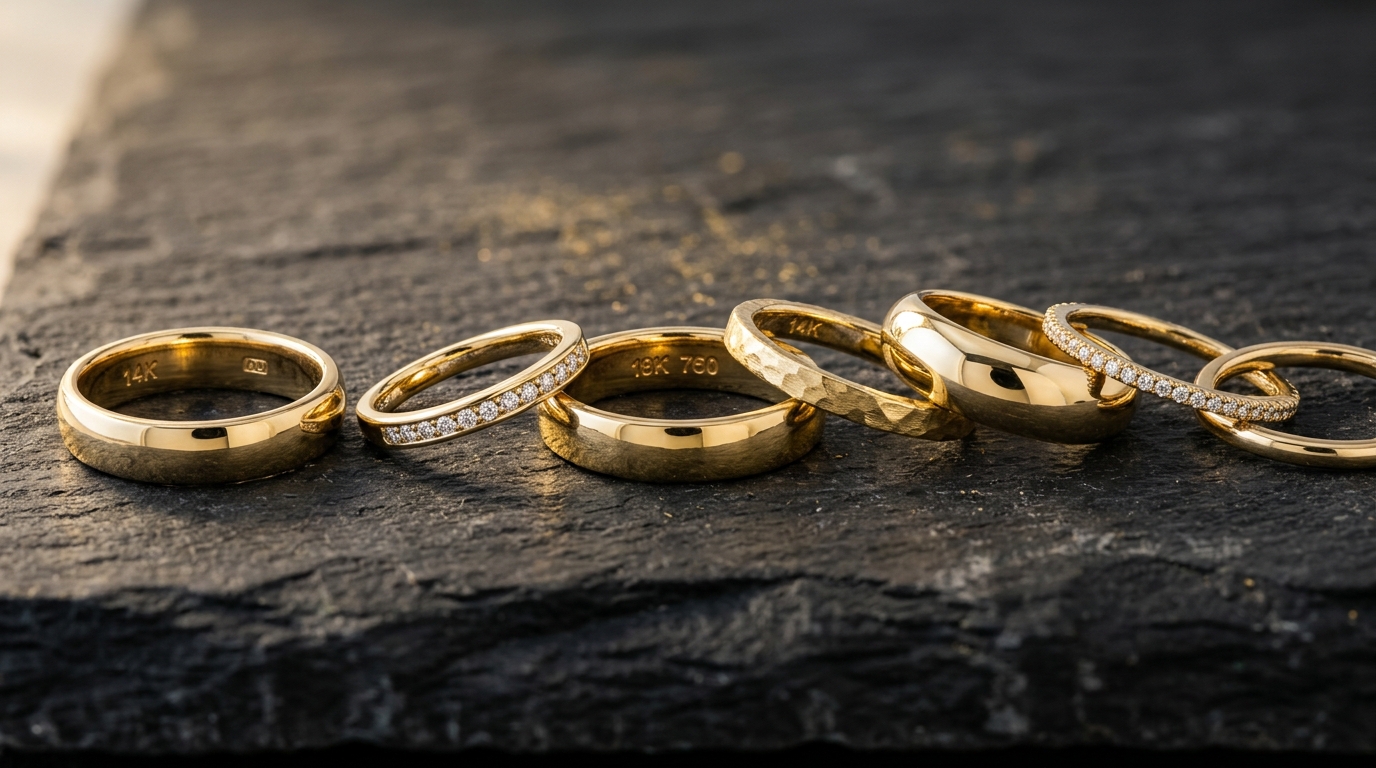
- 14K & 18K Solid Bands: Designed for a lifetime on your finger. Light surface scuffs (known as the patina of life) are natural and can be easily polished out during periodic workshop maintenance.
"A piece of fine jewellery is not indestructible armor; it is a wearable piece of art. Treat it with the same gentle respect you give a fine timepiece, and it will outlive generations."