
What BIS Hallmarking Means for Gold Jewellery: Purity Signs Explained
A complete consumer guide to BIS hallmarking in India. Learn how to decode the triangular BIS emblem, 750 (18K) and 585 (14K) purity marks, the 6-digit alphanumeric HUID code, and official BIS exemptions.
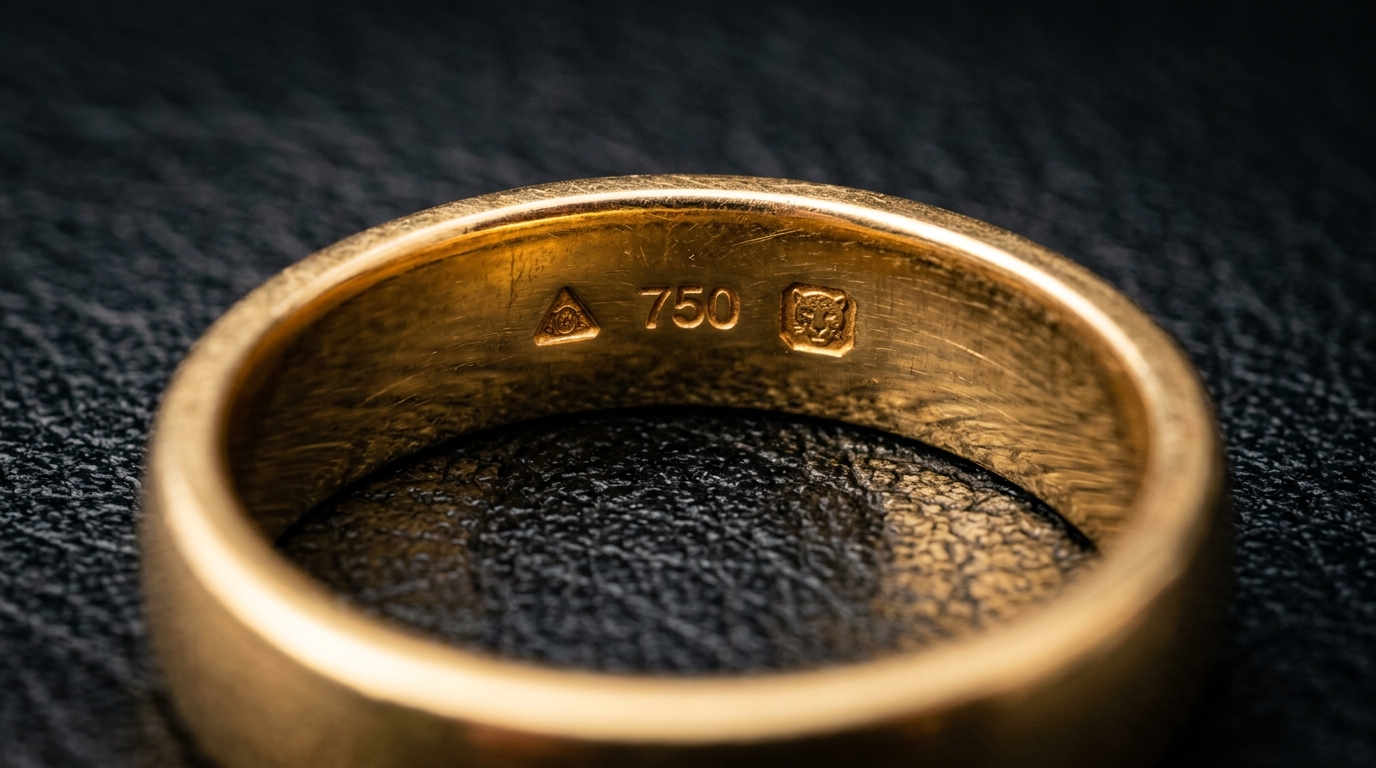
What Is BIS Hallmarking?
In the jewellery trade, gold purity cannot be verified by eye or weight alone. Even experienced goldsmiths cannot distinguish 18-karat gold from 14-karat gold merely by holding a ring.
To safeguard customers from under-karating and ensure precious metal transparency, the Government of India introduced phased mandatory hallmarking through the Bureau of Indian Standards (BIS) across notified districts.
A BIS hallmark is an official, government-regulated certification stamped directly onto precious metal items after destructive and non-destructive laboratory assay testing. When you inspect the inner shank of a gold ring crafted in our Surat workshop, this microscopic laser engraving certifies that the tested article conforms to the claimed gold purity standard.
---
The Three Mandatory Signs of a Valid BIS Hallmark
Prior to 2021, Indian hallmarks included four or five distinct symbols, including jeweller identification logos and assay center codes. Under current Bureau of Indian Standards regulations, hallmarking on covered articles has been streamlined into three official marks:
| Mark | Visual Identifier | Meaning & Purpose |
|---|---|---|
| 1. The BIS Logo | Equilateral triangle with a stylized dot | Official emblem verifying item passed BIS-accredited testing |
| 2. Purity / Fineness Mark | Karat number & fineness parts per 1,000 | Identifies exact gold percentage (e.g., 18K750, 14K585) |
| 3. 6-Digit HUID Code | Unique alphanumeric string (e.g., AB12CD) | Individual tracking code linked to Central Bureau database |
---
Decoding Gold Purity and Fineness Numbers
Gold purity in fine jewellery is measured in karats (out of 24 parts) or millesimal fineness (parts of pure gold per 1,000):
- 24 Karat (999): 99.9% pure gold. Primarily used for investment bullion bars and coins; too malleable for daily gem-set rings.
- 22 Karat (916): 91.6% pure gold. Rich butter-yellow tone, traditional in bridal jewellery, but prone to scratching under heavy diamond settings.
- 18 Karat (750): 75.0% pure gold alloyed with 25% copper, silver, and zinc. The international luxury benchmark for fine rings, offering rich color and dependable structural resilience.
- 14 Karat (585): 58.5% pure gold. Outstanding tensile strength and scratch resistance, ideal for modern daily wear solitaire rings and tennis bracelets.
- 10 Karat (417): 41.7% pure gold. Highly durable and budget-friendly for minimalist bands.
---
Understanding the 6-Digit HUID (Hallmark Unique Identification)
The introduction of the HUID system transformed precious metal accountability across India. Every single piece hallmarked under the scheme receives its own unique 6-character laser-etched code.
Why the HUID Code Matters:
- Authenticity & Traceability: Each HUID number is an individual digital identifier registered in the centralized BIS database, establishing end-to-end traceability and helping buyers verify that the article was officially tested and hallmarked.
- Consumer Verification via BIS Care App: Buyers can use the official BIS Care App (under the Verify HUID feature) and enter the 6-digit code to view the jeweller's registration details, the accredited Assaying and Hallmarking Centre (AHC), and the article type.
- Confidence During Resale & Exchange: While market resale value always depends on prevailing gold rates, gemstone weight, and jeweller policies, a genuine BIS hallmark provides credible, standardized proof of gold fineness so you are not subjected to arbitrary purity deductions.
---
Scope of Mandatory Hallmarking & Official BIS Exemptions
While hallmarking is standard practice among premium fine jewellers, the Government's mandatory hallmarking orders include specific phased criteria and legal exemptions defined by the Bureau of Indian Standards:
- Phased District Rollout: Mandatory hallmarking is enforced across designated/notified districts in India where accredited Assaying and Hallmarking Centres (AHCs) are operational (including Surat and major manufacturing centres), rather than being universally applicable to every remote locality simultaneously.
- Lightweight Articles Exemption (< 2 Grams): Under official BIS rules, gold articles weighing less than 2 grams are legally exempt from mandatory hallmarking to prevent structural bending or stress on delicate components during testing and stamping.
- Small Jeweller Turnover Exemption: Jewellers with an annual business turnover up to ₹40 lakh are exempt from mandatory hallmarking provisions under current guidelines.
- Export & Specialty Categories: Jewellery manufactured strictly for international export (conforming to foreign buyer specifications) and certain specialized traditional categories (such as Kundan/Polki jewellery where extensive non-gold filling makes standard assaying inapplicable) have separate guidelines or exemptions.
Our Atelier Standard: Even where legal exemptions apply (such as delicate bands weighing under 2 grams), fine ateliers like The Memorial Jewels maintain strict metal purity standards — ensuring our solid gold rings, earrings, pendants, and bracelets are crafted with genuine 14K (585) or 18K (750) alloys verified through certified assaying partners.
---
How Gold Is Tested: The Laser Assay Process
At BIS-recognized Assaying and Hallmarking Centers (AHCs), jewellery undergoes stringent testing:
- X-Ray Fluorescence (XRF) Spectroscopy: Non-destructive elemental analysis that maps the alloy's surface composition in seconds.
- Fire Assay Cupellation: The gold-standard chemical assay where small sample drillings are melted with lead in porous bone-ash cupels to extract and weigh pure gold to 99.99% precision.
- Micro-Laser Stamping: Once verified, a specialized fiber-laser marks the inner band without deforming delicate settings or stone mountings.
"True luxury is built on trust. At The Memorial Jewels, every custom gold ring, pendant, and bracelet leaves our Surat atelier stamped with the official BIS triangular logo, karat fineness, and unique HUID."